

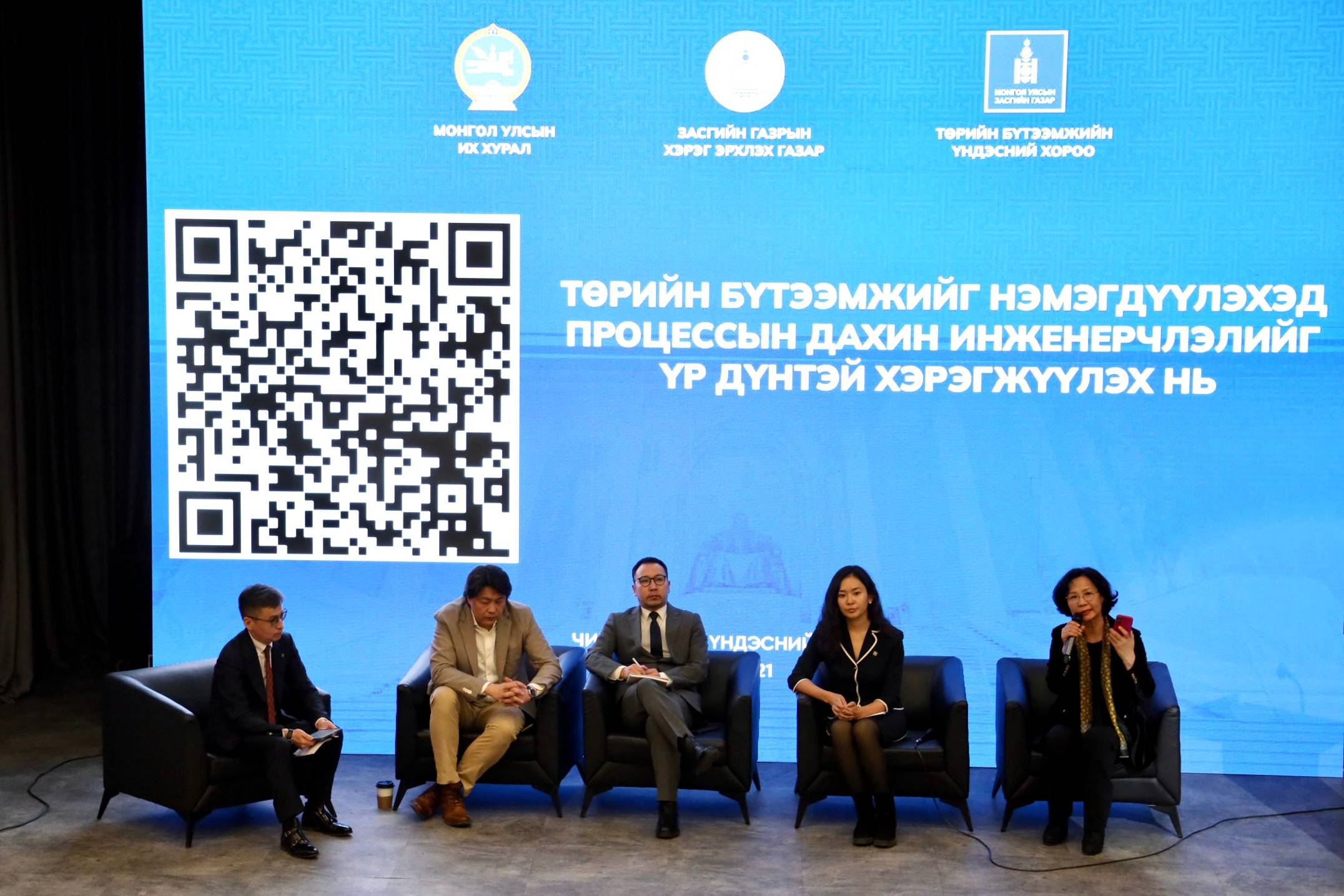
On January 21, 2025, the State Great Khural (Parliament) Secretariat, the Cabinet Secretariat of the Government of Mongolia, and the National Committee on State Productivity jointly organized a discussion titled “Implementing Process Reengineering Effectively to Increase State Productivity.”
The discussion brought together over 170 participants, including Members of Parliament (MPs), the Secretary General of the State Great Khural, heads of parliamentary-appointed organizations, officials from the Cabinet Secretariat, ministers, state secretaries, and representatives from affiliated organizations. Participants discussed the significance of process reengineering and explored strategies to improve government service quality and state productivity.
In his opening remarks, Chairman of the Parliament Amarbaysgalan Dashzegve reaffirmed his commitment to supporting initiatives aimed at enhancing government productivity and efficiency. He emphasized the importance of continuing process reengineering efforts that have been partially implemented since 1996, underscoring the need for continuity in state governance while striving for better outcomes.
The Chairman underscored that a parliamentary resolution has been issued to officially launch process reengineering initiatives across all levels of governance. To ensure effective oversight and coordination, a working group led by Member of Parliament Anar Chinbaatar has been established.
MP Anar Chinbaatar, head of the working group established under the 173rd resolution in 2024, presented a detailed report on the progress of process reengineering in government organizations. He explained that process reengineering aims to fundamentally redesign workflows to reduce costs, enhance quality, improve services, and increase speed, while also transforming the underlying organizational mindset
As part of the 2024-2028 strategic plan, the State Great Khural is prioritizing the modernization of government processes by aligning policies, organizational structures, human resources, and automation. The primary objective is to create public services that are transparent, simplified, proactive, and data-driven, while ensuring efficient, reliable organizational collaboration free from redundancies.
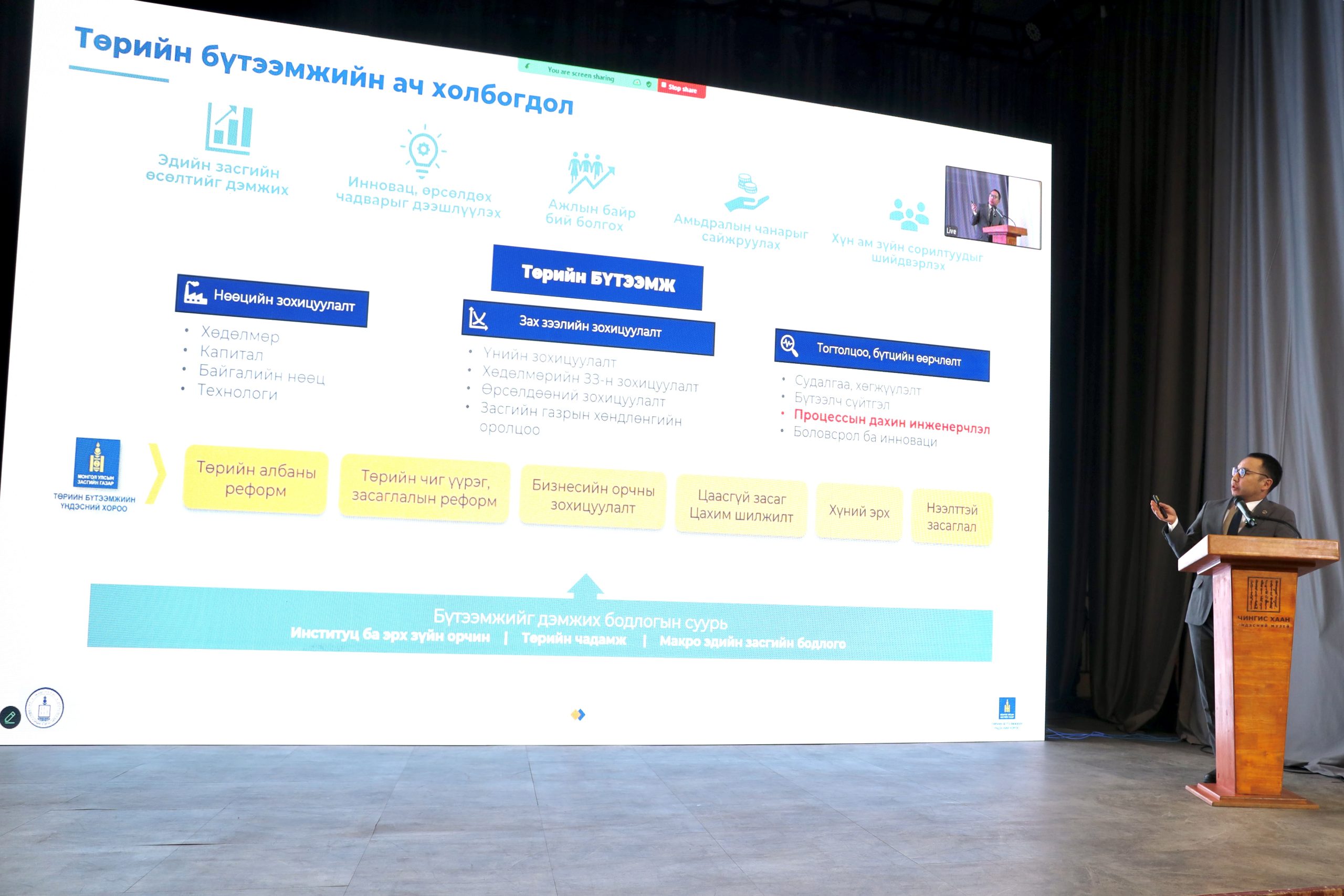
Following this, Tengis Sukhee, Head of the Secretariat of the National Committee on State Productivity, delivered a comprehensive presentation on government productivity and the significance of process reengineering. He defined government productivity as the efficient use of state resources to deliver services to citizens and organizations. Process reengineering, he noted, aims to eliminate inefficiencies, reduce costs, and enhance service quality while preserving effective existing processes.
The presentation emphasized that the first step in reengineering is evaluating processes, which are categorized into internal (inter-agency activities) and external (services provided to citizens and legal entities). These processes are assessed using key indicators such as time, cost, complexity, transparency, and satisfaction. Outcomes are measured both at the systemic level and for individual stakeholders, ensuring alignment with national development policies and strategic plans.
Key priorities include eliminating traditional paper-based systems, removing inefficient or redundant procedures, and achieving cost savings. Additionally, improving inter-sectoral coordination, consolidating overlapping or neglected processes, and redesigning workflows are critical for creating a more efficient, citizen-centered public administration.
In recent years, the government has strengthened the legal framework for process reengineering through the adoption of the Digital Development legislative package and amendments to 109 related laws. These measures aim to modernize public services and prioritize citizen-centric approaches.
Under the Prime Minister’s directive, the National Committee on State Productivity, along with its dedicated staff, is planning to integrate state-provided services for legal entities into the eBusiness system. This marks a key step in advancing process reengineering and promoting a business-friendly environment.
He stressed that the leadership and active participation of ministry and agency executives are crucial for achieving these objectives.